
Internal tools · 5 September 2026 · 4 min read
The warehouse runs on paper because the software is unbearable
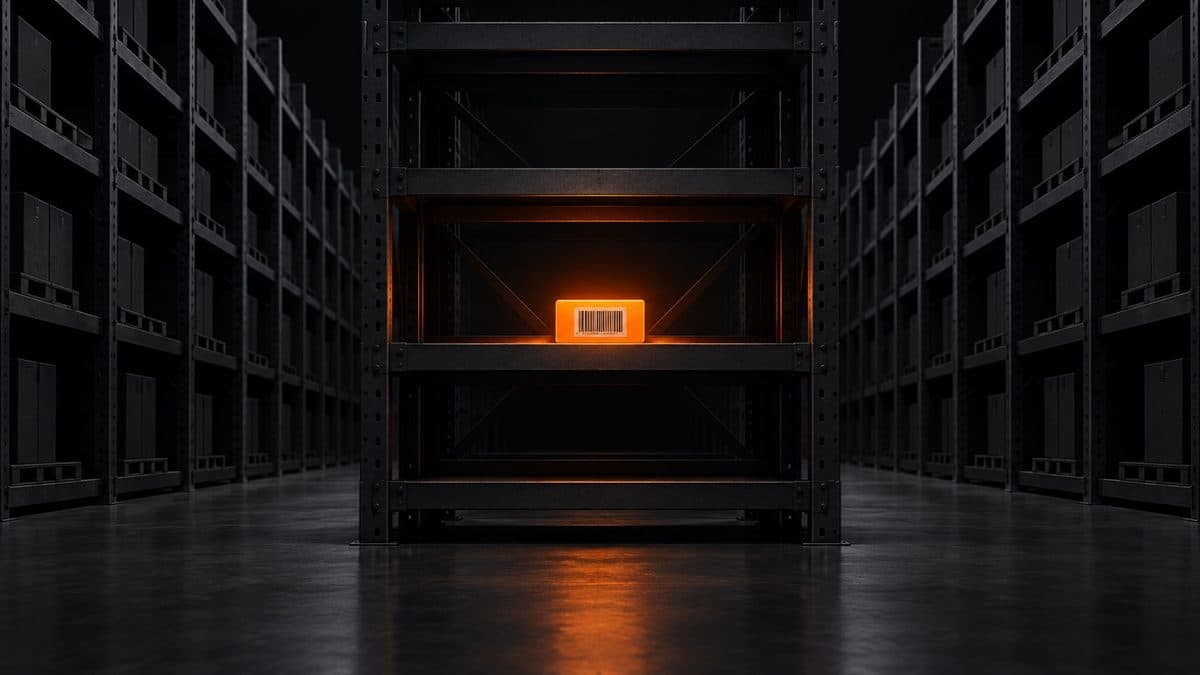
There is a management system. It was expensive. It is paid for every year. And if you walk into the warehouse, there is a clipboard on a shelf and a person writing on it.
This gets described as a discipline problem — "they won't use the system". It almost never is. The people avoiding the software are usually the ones who know the work best, and they've made a rational choice.
Why they avoid it
Because the system was designed for the office. Forms with twenty fields, built for somebody sitting at a desk with both hands free and full attention available.
In a warehouse you are standing, holding something, walking. Any tool that needs two hands and your full concentration loses to paper. Every time. Paper is not better — it is just possible.
What we built instead
A mobile-first app running on hardware the company already owned: scan a barcode, look up a product against the real catalogue, count stock, support an order. Designed around how the warehouse actually moves rather than how the office files things.
The obstacle: most items had no barcode at all
The plan assumed scanning. Reality got in the way: a large part of the catalogue had no barcode associated with it. A scanner is useless when the code isn't in the system.
The obvious fix was a data-entry project — months of somebody associating codes. Those projects get started and never finished. So instead the app learns: scan an unknown code, confirm once which product it belongs to, and from then on it's known. The catalogue fills itself during work that was happening anyway.
That reframing is the whole project. The difference between a six-month clean-up nobody will start and a gap that closes by itself.
The second obstacle: the network
Steel shelving, concrete, and a signal that comes and goes. A tool that loses your count when the connection drops is worse than paper — because paper never claims to have saved something it didn't.
What changed
- Counting done from a phone, against the real catalogue, by the person actually standing there
- No retyping into the office system afterwards — that step disappears entirely
- Missing barcodes learned as they're scanned, instead of a project nobody has time for
- Inventory in an evening rather than days
The honest part
None of this fixes a warehouse that is physically disorganised. If the shelves don't match the map, a better tool just tells you more quickly that you can't find it.
If the tool needs both hands and your full attention, it loses to paper. Every time.
More field notes
Ownership · 10 September 2026
Your website works fine. You just don't own it.
From the outside everything looks normal. You find out the day you want to change a price — and discover that the hosting, the domain and ten years of search ranking sit in somebody else's account.
Content · 9 September 2026
€1,500 a year for one article a month
The invoice arrives every year. Twelve articles arrive with it. Nobody reads them — including the person who signed the contract. Here's what that money was actually buying, and what replaced it.