
Product · 12 August 2026 · 5 min read
Why we built a verification engine instead of another job board
An entire industry hiring through classified ads and phone calls, with no reliable way to tell a good candidate from a bad one before the job starts. That's the problem CleanHub was built around — and it isn't unique to cleaning.
Listings solve the wrong problem
A directory of profiles tells an employer nothing they didn't already have on a scrap of paper. The bottleneck was never visibility. It was trust: which of these people can genuinely do the job, and how would you know before hiring them?
That question can't be answered by a nicer-looking list. It needs a system that scores skill, checks identity and verifies experience — and keeps doing it as someone's track record grows, not once at sign-up.
The obstacle: people don't finish their profile
The score only works if the profile is complete, and profiles sat half-empty. Telling someone "your profile is 60% complete" changes nothing — it names a problem without handing over the solution.
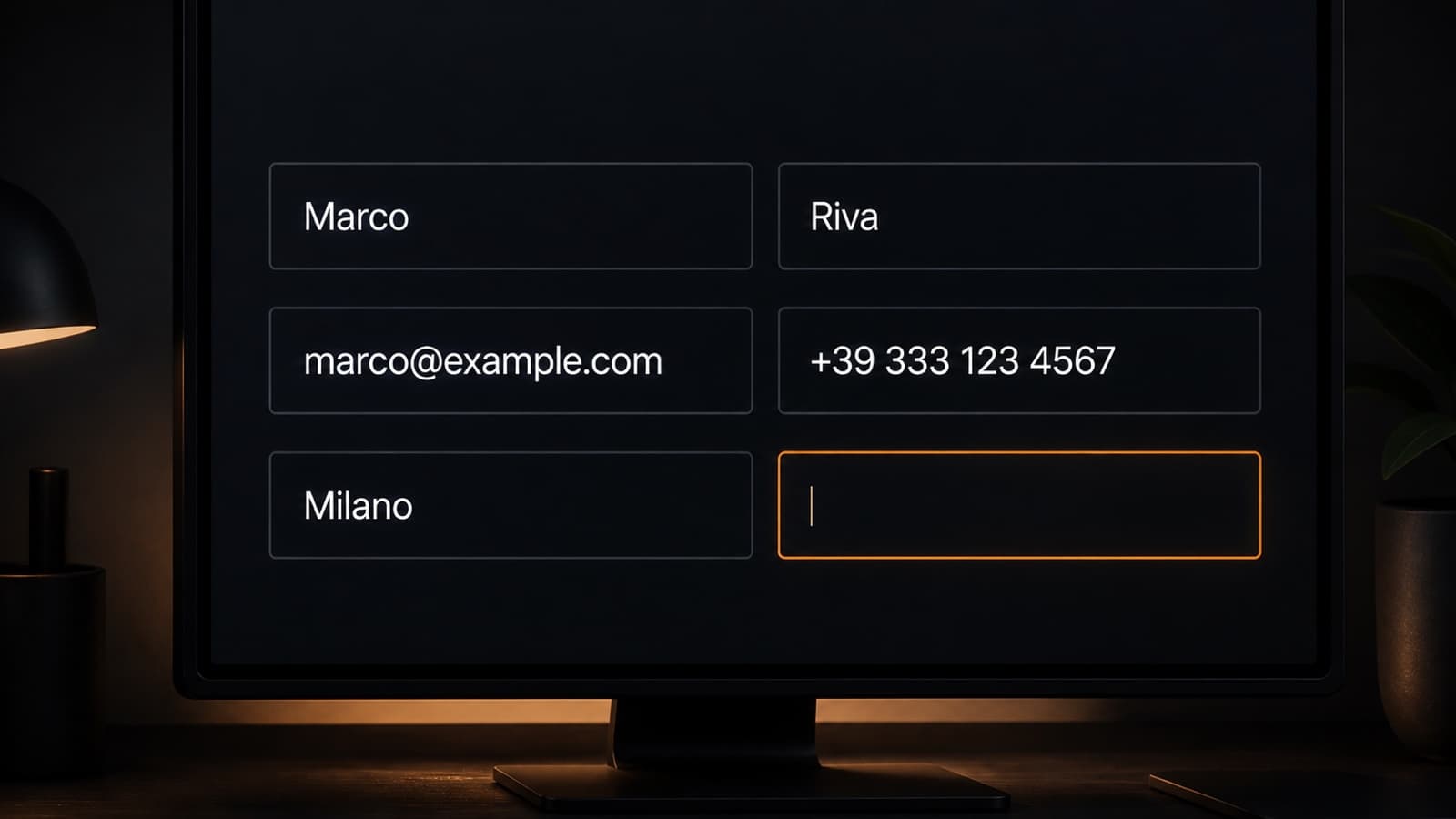
What worked was showing exactly what was missing, item by item, and taking them straight to a form containing only those fields. Not the whole profile again: the four things still outstanding.
The obstacle: one missing field made people invisible
A profile could look complete and still never appear in a single search, because the province field was empty and every search is filtered by area. From the operator's side nothing seemed wrong — they simply never got contacted.
Silent failures like this are the expensive kind. Nobody reports them, because nobody knows they're happening. It became a required field, and the fix was retroactive: existing profiles were caught too, not just new ones.
The obstacle: an entire feature nobody could see
Certificates uploaded by operators: 1 out of 4,047. The feature worked perfectly. The button that opened it was tied to a toggle that was switched off for almost everyone — so the whole flow existed, was tested, and was invisible.
A feature nobody can reach is indistinguishable from a feature that was never built.
The lesson stuck: when a number comes back absurdly low, the bug is usually not in the feature. It's in the path leading to it.
What the system actually does
- A scoring and levelling engine built on skills, experience and verification — not a self-reported rating
- AI-assisted checks on identity documents, certificates and CVs, so verification doesn't wait on a human queue
- Search and matching that ranks on the same score employers actually care about
- An operational side for companies — jobs, sites, clock-in, reporting — not just recruiting
- Automated multilingual communication, so the platform speaks to each user in their own language

Why it's a system, not a feature list
Every piece depends on the others. A score means nothing without verification behind it. Verification is too slow to matter without AI doing the first pass. Matching is only as good as the score it ranks on. Building any one of them alone would have solved nothing — the value only appears once the loop closes.
That's the same principle behind every system we build: start from what the process needs in order to be trustworthy, not from a template that looks like every other site in the category.
More field notes
Ownership · 10 September 2026
Your website works fine. You just don't own it.
From the outside everything looks normal. You find out the day you want to change a price — and discover that the hosting, the domain and ten years of search ranking sit in somebody else's account.
Content · 9 September 2026
€1,500 a year for one article a month
The invoice arrives every year. Twelve articles arrive with it. Nobody reads them — including the person who signed the contract. Here's what that money was actually buying, and what replaced it.